You already made the claim
Read your own product page. Somewhere on it is the word protective, or abrasion-resistant, or a line about riders getting home in one piece. It is on the hangtag and in the launch email, and it is probably in the paid social too.
Nobody made you prove any of it before you published it. No authority inspects a motorcycle jacket for protection before it goes on sale, and there is no protection mark you have to earn. You wrote the claim and it went live.
That is the part brands have right. What happens next is where it goes wrong.
Test first, claim second
Canada writes it down plainly. Under the Competition Act, you may not make a representation to the public about a product's performance, efficacy or length of life unless it is based on an adequate and proper test, and the test has to have been done before the claim is made. If it is challenged, the burden of showing the test was adequate and proper sits on you, not on the person asking.
Test, then claim.
The US arrives at the same place by a different road. An objective advertising claim, express or implied, needs a reasonable basis before it is published, and a claim about certification needs the level of support it communicates. Say it protects and you have taken on the job of proving it protects.
So the position in both countries is not "no rules". Nothing obliges you to certify, and the rules on what you may claim apply in full, which is the worst combination for a brand that markets on safety and buys no evidence. You can sell the jacket untested. You cannot call it protective without the evidence behind the word.
Nobody will define the word
Here is what a rider is told.
NHTSA names a standard for the helmet and nothing at all for the rest of it. In the same passage its own guidance cites FMVSS 218 for helmets, then says:
"Well-constructed jackets, pants, boots, and gloves can prevent abrasions and bruises. If made of impact-resistant materials, they even may prevent arm and leg fractures or serious torso and spinal cord injuries."
Well-constructed. Never defined. No standard, no class, no test, in the same breath as a standard number for the helmet. The same page records that there is no data on how many riders wear the various types of protective clothing, other than helmets.
Quebec does the same thing in French. Since the 2025 season, apprentice riders there must wear protective clothing for driving-school lessons and SAAQ practical examinations, and the SAAQ recommends leather or anti-abrasion textile clothing that is homologués, approved, in high-visibility colours. Approved by whom, against what, it does not say.
Two authorities, two countries, and in both the quality a rider is told to look for is left undefined.
Neither of them names a standard for the clothing. The European standards are what a certification body will assess your product against, and a certificate names the standard, the class or level, the body and the scope. That is what puts something behind the claim you are already making, and it is the certificate's commercial value in your home market.
The factory's word is not a certificate
Here is how the claim gets made without anyone reading a certificate.
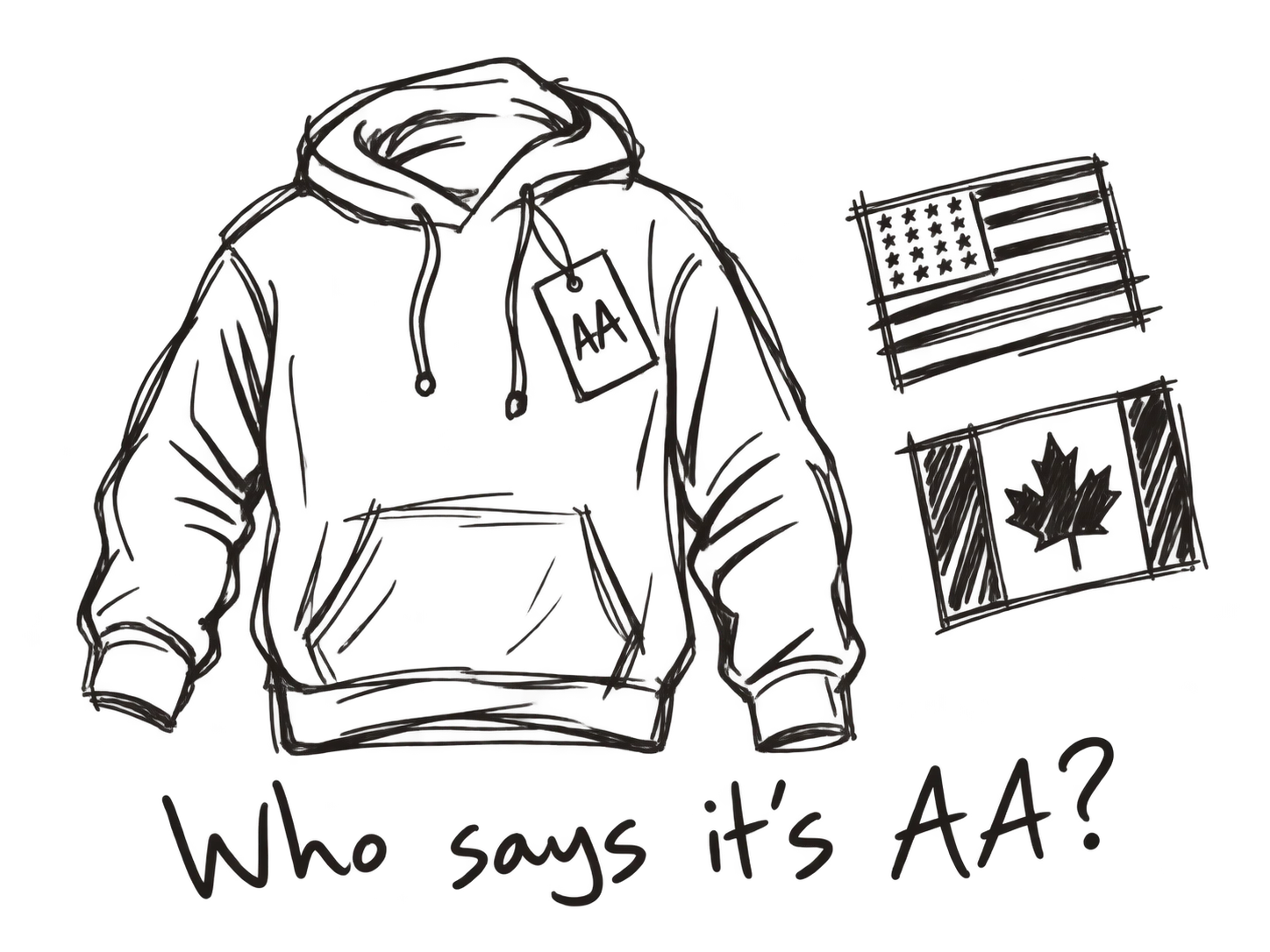
The factory says the jacket is AA. The line sheet says AA, because someone copied it off the factory quote. The hangtag says AA, the product page says AA, the retailer's filter says AA, and nobody in your building has read the document. You are repeating what a supplier told you, in your own name, to your own customers.
Until you have seen a valid certificate that names the product you are selling, your AA claim is the factory's word and nothing else. Yours is the name on the jacket and on the invoice. Willing to risk that?
So ask for the certificate, and read four things on it. The product it names, because a certificate covering a garment that is not your garment does not cover what you ship. The scope it covers. The date it expires. And whose name it is in: if it names the factory as the manufacturer rather than you, you need your own certificate, or the factory's evidence extended to your brand in writing by the body that issued it. A certificate in someone else's name is not your evidence.
What you are buying
Three things get sold by test houses and certification bodies, and it is easy to buy the first while talking as though you hold the third.
A test report records a result on a defined sample by a defined method. It says what was tested, and it is not a certification decision. Voluntary certification is an assessment against a scheme, carrying whatever scope that scheme sets. EU type-examination is an independent notified body examining the product type against the standard and issuing a certificate with a defined scope.
Say which of the three you want, and get the deliverable written down before you commit. A brand buying evidence for its US and Canadian marketing wants something different from a brand buying market access.
One thing worth knowing before you make that call: a certification body will take your product through type-examination, and certify it if it passes, whether or not you ever sell it in Europe. Certifying does not commit you to a European launch and does not oblige you to set anything up there. Used at home, the certificate is documentation that verifies the product, and that is all you need it to be.
What you hold decides what you can write
A test report supports a statement about what was tested, by the method used. It supports nothing beyond that, and nothing about certification. A certificate supports a statement about the product it names, against the standard it was assessed to, within the scope of that assessment. Anything past that is a claim with nothing under it.
A certificate is not a declaration of conformity. The declaration belongs to the full European route, and a brand holding the certificate alone has none. If you do go on to complete that route, the declaration it produces then has to be reachable by the person wearing the product, either as a printed copy with the product or, in practice, as an internet address in the user information.
Getting the wording right on a live page is its own job, and a bigger one than it looks. Which sentence sits where, what belongs in the specification block, what has to stay out of the marketing copy, and which of your existing claims survive contact with the certificate you hold: that is a review of the page against the evidence, product by product. The cheap version is to keep every compliance fact in one labelled place, and keep protection language out of the features list, which is the copy nobody ever checks.
The CE jacket problem
Now one of the biggest red flags on a product page. It gets missed because the claim is usually true of the armour.
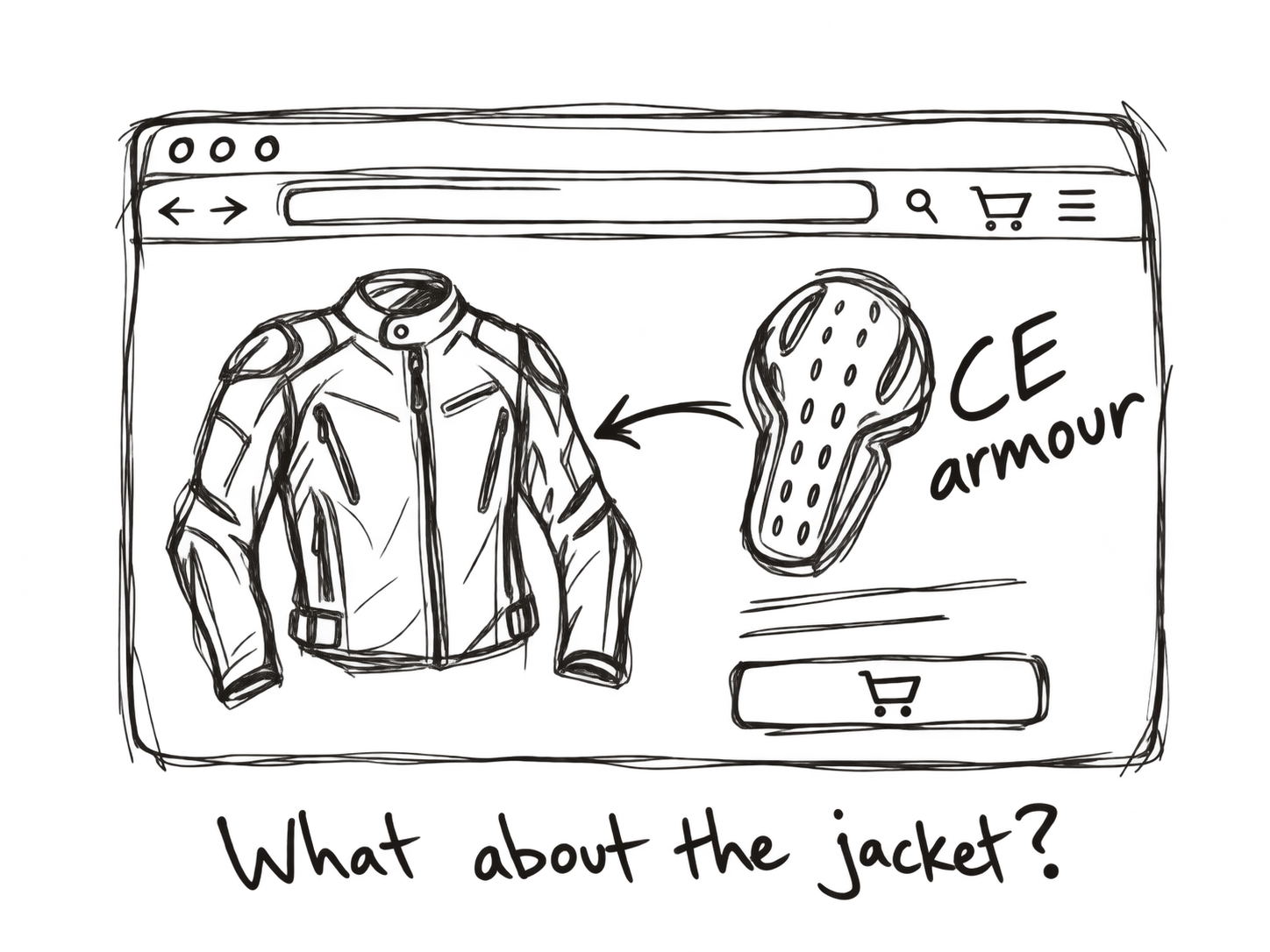
You fit certified armour. The shoulder and elbow protectors are certified to EN 1621-1, bought from a serious supplier, and the certificates are real. So the jacket goes to market described as CE, or CE-rated, or carrying "Level 2" on the page.
The armour is certified. The jacket is not. EN 1621 is a protector standard and protectors are certified to it. It says nothing about the shell, the seams, the abrasion performance or the construction that a garment standard assesses. A garment claim built on component evidence is borrowed conformity: a true fact about one thing, doing work it is not entitled to do for another. It is the mistake behind They paid to certify the jacket and sold the armour.
The same trap in its known forms: "Level 2" standing alone, which is the armour's level presented as the garment's. A mark placed next to the armour on the page, where a reader takes it for the garment's. A class the certificate does not award. Protectors named in the copy but not fitted in the box, with nothing saying so.
There is a second version arriving from the other direction. A third-party certifier's name, logo or seal on your page can itself be an endorsement in US advertising terms, and a certificate issued by a third party does not discharge your own duty to substantiate what it communicates to a buyer. A careful line in the specification block cannot rescue a headline or a photograph that promises more. CE is manufacturer conformity with EU requirements. It was never an independent quality award, and a page that presents it as one has made a claim the certificate does not support.
Know your class
The garment classes are not one descending quality scale, and brands lose arguments with their own buyers by treating them as one. Class B, to take the one that catches people out, is an abrasion-only class with no impact protectors and no pockets for them. Which class you aim at is a design decision as much as a testing one, and it is much cheaper to settle before testing than to discover afterwards.
Gloves are judged whole
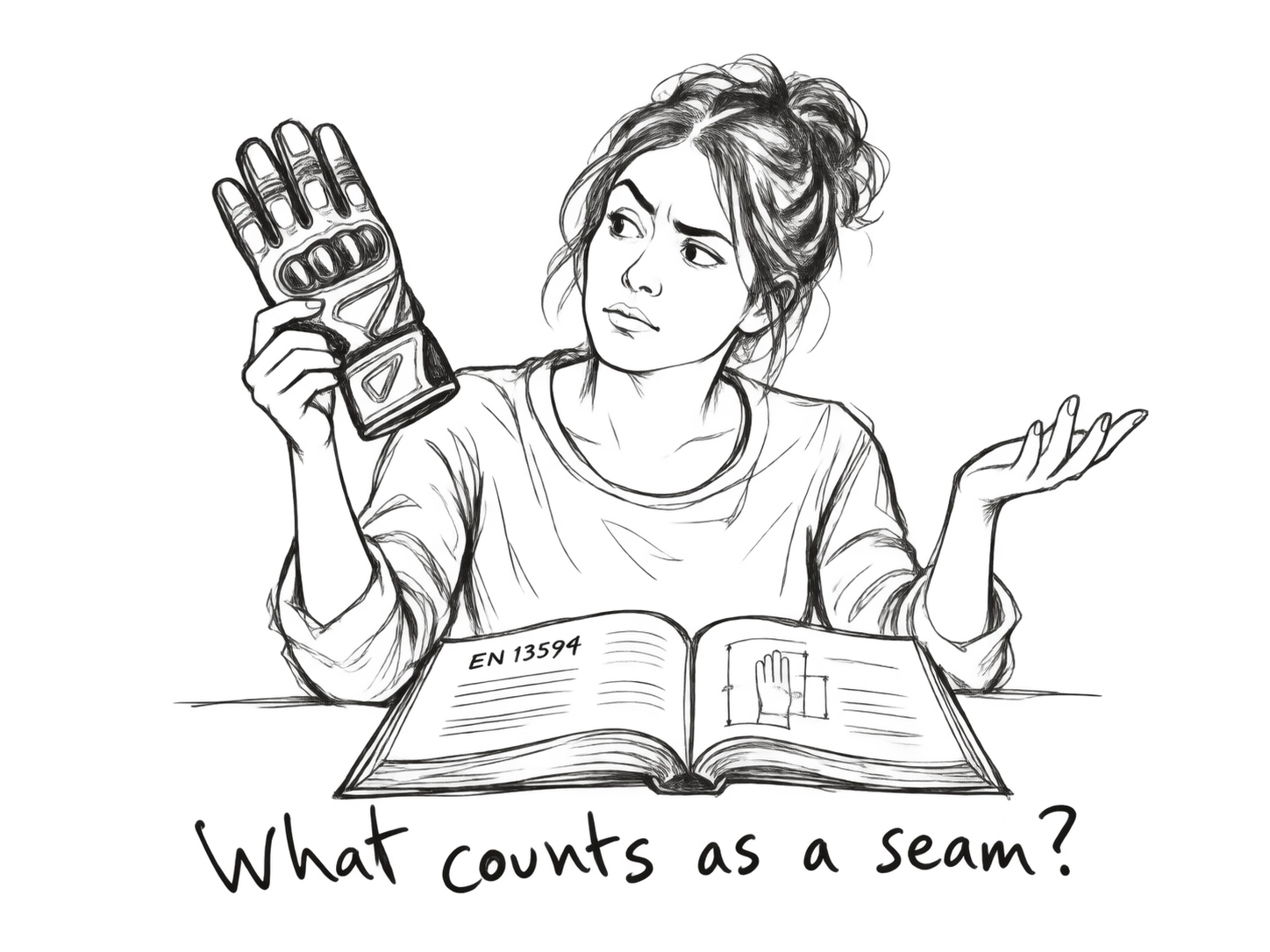
A glove is assessed as a complete glove. Restraint, seams, materials and ergonomics together decide the result, so a hard knuckle on its own establishes nothing about the glove it is sewn into.
What this does not cover
A European certificate is not a general clearance at home. Clothing flammability requirements can apply in both countries and need a product-specific check of their own.
It does not give you Europe either, but not for the reason brands expect. The certificate is not the obstacle. Putting product on the market there is the separate job, and it brings requirements of its own, including an operator established inside that market who answers for the product. That can be your importer rather than a representative you appoint, so work out what your supply chain already gives you before you go shopping for one.
Start here
You may already have a catalogue of products selling, none of them tested, and the size of that gap is the reason brands do nothing about it. You do not have to fix the range. Pick one product, the one you sell most of, and put it through testing and certification. One product at a time is still forward, and the first one teaches you what the rest will cost.
While you are deciding which, write down two things for that product: the claim your page makes today, and the evidence you hold for it. If the first line runs to a paragraph and the second line is empty, that gap is the work.